


国考
Chinese experts dismiss hype of border issue, call for China, India to prevent it from hijacking bilateral ties_我的网站

A | "We will not carry out an operation that the international community does not understand. We will carry out the operation 'in the language' the international community understands. Turkey has serious experience on the issue. There is no need to worry," Erdogan said in Madrid, when asked about the international community's attitude towards the military operation planned by Ankara in northern Syria.,Russia Has Warned Turkey That New Syria Op Would Lead to More Violence, May Prompt Separatism16 June, 10:39 GMT,On June 26, Turkish presidential spokesman Ibrahim Kalin said that Ankara is ready for a new military operation in northern Syria.,"We have previously conducted operations in northern Syria, and then there was pressure on us. But we proceeded only from our national interests. Our president said very precisely, the operation can start at any moment. We are ready for it," Kalin said in an interview with Turkish broadcaster Haberturk.。
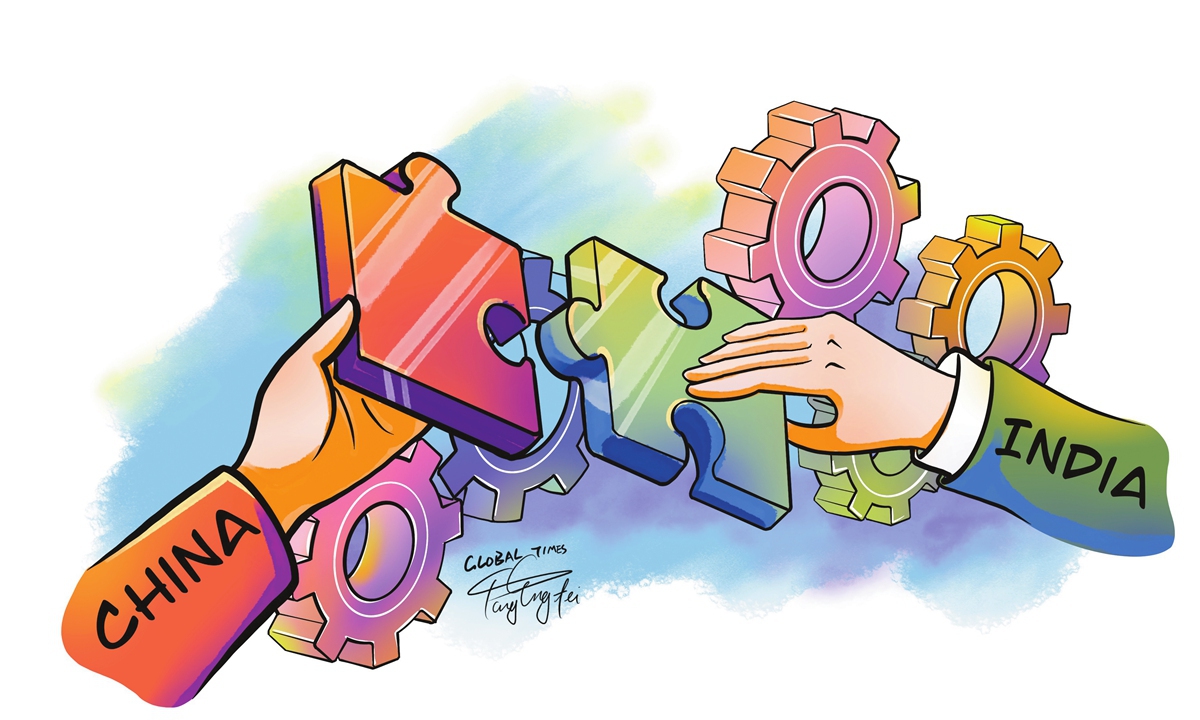
Some Indian media outlets and regional political forces have recently sought to amplify allegations of an unverified China-India border confrontation, while official signals from Beijing and New Delhi have emphasized stability, communication and the importance of managing differences through established mechanisms.
The contrasting narratives have emerged at a moment when exchanges between China and India in various fields have gradually resumed, and cooperation has been advanced in an orderly manner, Chinese experts noted, warning that sensationalizing border-related claims could disrupt the hard-won momentum in bilateral ties and the two countries should prevent the boundary question from hijacking their broader relationship.
Contrasting narratives
The latest media speculation was partly triggered by claims made by the People's Party of the so-called "Arunachal Pradesh" (PPA), a regional Indian political party. According to The Arunachal Times, a local Indian newspaper, a four-member PPA "fact-finding committee" led by former minister and party adviser Kahfa Bengia visited the so-called "Taksing area" (known as Taxin, in Zangnan, Southwest China's Xizang Autonomous Region) on July 10 and subsequently alleged that Indian forces had been prevented from accessing several patrolling points.
The claims were then amplified by Indian news outlet ThePrint, which reported on Tuesday, citing unnamed sources, that Chinese and Indian patrols had allegedly come "face to face" near Taxin in late July.
The outlet further claimed that Chinese personnel subsequently left before returning in early August and setting up "two or three tents."
However, ThePrint acknowledged that sources in India's defense and security establishment said the "situation was well under control."
Some other Indian reports have also questioned the sensational allegations. India Today reported on Wednesday that Indian government sources dismissed social media claims circulating about what was described as "slow encroachment," while noting that similar allegations regarding the area had previously been rejected by local authorities and the Indian Army.
In fact, the claims stand in contrast to the official diplomatic signals coming from both sides.
Asked on Tuesday about reports concerning the border, Indian Ministry of External Affairs spokesperson Randhir Jaiswal said New Delhi takes border matters seriously and reiterated India's position that "the state of the border affairs will reflect on the state of our larger bilateral ties," according to a media briefing released by the ministry on its website on Tuesday.
He also referred to existing mechanisms for dealing with border issues and preventing misunderstanding and miscalculation, according to the briefing.
Responding on Wednesday to questions from Bloomberg and Reuters concerning social media claims about stepped-up Chinese military activity and a possible new border incident, Chinese Foreign Ministry Spokesperson Guo Jiakun said, "The China-India border situation is generally stable at the moment."
"China and India held the 36th meeting of the Working Mechanism for Consultation and Coordination (WMCC) on China-India Border Affairs last week. The two sides agreed to maintain communication via diplomatic and military channels and jointly uphold peace and tranquility in the border areas," Guo said.
Qian Feng, director of the Research Department at Tsinghua University's National Strategy Institute, told the Global Times on Thursday that the fact that the two sides continue to communicate through established channels shows that the border situation has not developed in the direction of escalation portrayed by some Indian media.
Such hype also came amid another development concerning Zangnan. India on August 7 announced what it called "standard" names for 27 locations in so-called "Arunachal Pradesh," a move that some Indian media outlets portrayed as an effort to counter China and further connected with the latest reports of border tensions.
China has firmly rejected the move. Responding to the issue on Monday, spokesperson Guo said, "Zangnan region is China's territory. China does not recognize the so-called 'Arunachal Pradesh' illegally set up by India."
Guo said India's attempt to replace names long used by China with its so-called "standard names" is "illegal, null and void," and stressed that it would not change the fact that Zangnan belongs to China.
Hu Zhiyong, a professor from Zhejiang International Studies University and a research fellow at the Institute of International Relations at the Shanghai Academy of Social Sciences, told the Global Times on Thursday that border and security issues have traditionally been susceptible to political manipulation in India's domestic politics. "When domestic economic and social problems become difficult to address, issues involving the borders with China or Pakistan can easily be pushed to the forefront to divert public attention," Hu explained.
He said economic pressures, concerns over foreign investment and the domestic business environment, together with accumulated public sentiment, could provide incentives for some political forces to magnify external disputes.
Hu argued that another problem lies in the tendency of some Indian political figures to bind the boundary question too closely to the entire China-India relationship. "The boundary issue is one part of bilateral relations, which also encompass political, economic, diplomatic, security and people-to-people exchanges," Hu said. "It should not be allowed to hijack the entire relationship."
Dialogue matters
According to the Chinese Foreign Ministry's statement of the August 6 meeting, the two sides conducted constructive dialogue in a candid and friendly manner, had an in-depth exchange of views on further implementing the consensus reached during the 24th Round of Talks between the Special Representatives of China and India on the Boundary Question, and agreed to jointly prepare for the coming 25th Round of SR talks. The two sides also discussed boundary delimitation, border management, mechanism development, cross-border exchange and cooperation. The two sides agreed to continue to maintain diplomatic and military communication, and jointly safeguard peace and tranquility in the border areas.
Hu pointed out that the timing of the latest speculation is noteworthy, as border issues have at times been used by some forces in India in an attempt to gain leverage ahead of important bilateral interactions.
The 36th WMCC meeting demonstrates that the two sides possess functioning channels through which disagreements can be addressed. This is particularly important as China and India seek to sustain the improvement in relations and prepare for further high-level interactions, said Chinese observers.
"The boundary dispute is a complicated issue left over from history and cannot be resolved overnight," Qian said. "What matters is to keep diplomatic and military communication channels open, promptly handle frontline frictions through established mechanisms, expand people-to-people exchanges and strengthen coordination under multilateral frameworks such as BRICS and the SCO."
。
Current article:http://eydjr.seruilushuishamie.bond/08up/bxq8kz.html
Published on:12:13:58
 太压节奏!范弗里特半场8中2仅拿5分1板5助1断 2次失误
 四进决赛未能开走保时捷,萨巴伦卡:很高兴自己买得起这辆车
 河南省成功发行政府债券300.81亿元
 掘金记者盛赞德罗赞签约:填补替补席得分空白
 莫德纳癌症疫苗 一针近50万美元
 山东一平房爆炸,周边多栋居民楼遭重创,知情人发声
 爱奇艺举办创作者大会,打出扶持“组合拳”共建多赢的创作者生态
 全国桥牌通讯赛点亮“全民健身日”
 美记:森林狼众将8月提前加练印证换血正确
 2026年短途出行 哪些优质山水景区更适配全龄出游
 36国接到消息,高市定调反俄,日籍佣兵杀向战场,普京面临新挑战,兵器志,原创 36国接到消息,高市定调反俄,日籍佣兵杀向战场,普京面临新挑战
 一个月两次出手!京东再度驰援广西 无需汇报直接开仓救灾